
Going solar is one of the smartest money moves a Filipino homeowner can make right now. Meralco rates keep climbing, panel prices have dropped hard, and net metering lets you earn credits for extra power. This guide gives you the real 2026 prices, plain and simple, so you know exactly what to budget before you talk to any installer.
"We published this 2026 pricing guide because Filipino homeowners are constantly misled by hidden inverter fees and low-tier panel markups. Real solar engineering requires complete transparency on system costs, VAT exemptions under RA 9513, and actual Meralco net metering returns."
Key takeaways
- A full home solar system in the Philippines costs about ₱120,000 to ₱750,000 in 2026, depending on size and setup.
- Most homes fit a 3 kW to 5 kW system, or about ₱165,000 to ₱400,000 fully installed.
- Installed prices dropped to around ₱55 to ₱75 per watt in 2026, down from ₱80 to ₱90 in 2024.
- Meralco residential rates now sit near ₱13 to ₱14 per kWh, among the highest in Southeast Asia.
- Most families reach payback in 4 to 7 years, then enjoy low-cost power for 15 to 20 more years.
- Net metering pays you the generation charge only, about ₱5 to ₱6.50 per kWh, not the full retail rate.
How Much Do Solar Panels Cost in the Philippines? (2026 Update)
Affordable solar panels cost in the Philippines have changed significantly over the past year. In 2026, on-grid installations offer lower initial costs without a battery, while back-grid (hybrid/off-grid) systems include batteries for added security during power outages.
A complete home solar system in the Philippines costs about ₱120,000 to ₱750,000 in 2026. The exact price depends on your system size, the brands you pick, your roof, and whether you add batteries.

Most Filipino families install a 3 kW to 5 kW system. That is enough for a normal home with a few aircons and covers a Meralco bill in the ₱5,000 to ₱14,000 range. Here is what common system sizes cost today.
| System size | Fits this home | Installed price (2026) | Monthly output |
|---|---|---|---|
| 3 kW | Small to medium home, bill ₱4k–₱8k | ₱165,000–₱250,000 | 350–450 kWh |
| 5 kW | Medium home, 1–2 aircons, bill ₱8k–₱14k | ₱275,000–₱400,000 | 550–700 kWh |
| 8 kW | Large home, bill ₱14k–₱22k | ₱440,000–₱600,000 | 900–1,100 kWh |
| 10 kW | Large home or small business, bill ₱22k+ | ₱550,000–₱750,000 | 1,100–1,400 kWh |
These are grid-tied prices without batteries. Adding batteries raises the total by a lot, which we cover below. In per-watt terms, quality installations now run about ₱55 to ₱75 per watt in 2026. That is a 20 to 30 percent drop from 2024, thanks to cheaper panels and more local installers competing for your business.
Solar System Sizes and Costs (2026 Update)
Solar system sizes range from 3kW to 5kW for most homes, with estimated costs between ₱120,000 to ₱750,000 across all capacities. A solar quote is more than just panels. When you compare prices, a cheap quote often leaves out safety parts, mounting, or permits. Here is where your money goes in a normal installed system.
| Part | What it does | Rough share of cost |
|---|---|---|
| Solar panels | Turn sunlight into DC power | 30–40% |
| Inverter | Convert DC into the AC power your home uses | 15–25% |
| Mounting and rails | Hold the panels firmly on your roof | 5–10% |
| Wiring and safety | Cables, breakers, and grounding that protect the system | 5–10% |
| Installation labor | Design, mounting, testing, and commissioning | 10–20% |
| Permits and net metering | Legal approval and the grid connection | Small but real |
| Battery (optional) | Store power for night use and brownouts | Adds 40–60% to the total |
The one thing to rememberBatteries are the single biggest cost driver in any solar system. If your Meralco supply is reliable and your only goal is a lower bill, you can skip batteries and save a large amount. Add them only if brownouts are common or you want backup power.
How much you can save with solar
The savings story starts with your Meralco bill. The residential rate now sits near ₱13 to ₱14 per kWh, and it has climbed roughly 40 percent since 2020. Every peso that rate goes up makes your solar pay back faster.
A 5 kW system makes about 550 to 700 kWh per month. At current rates, that is roughly ₱6,000 to ₱9,000 in electricity value every month. Over a 4 to 7 year payback period, the system pays for itself. After that, you get low-cost power for the rest of its 25-year life, with panels still producing about 85 to 90 percent of their original output at year 20.
Use it, do not export itThe biggest savings come from using your own solar power during the day, not from selling it back. Daytime self-use replaces power you would have bought at the full ₱13 to ₱14 rate. Exported power only earns the generation charge, about ₱5 to ₱6.50. So size your system for daytime use, and run heavy loads like aircon, laundry, and the water heater while the sun is out.
On-grid, off-grid, hybrid, or backup: which fits you
The system type you choose changes both the price and what you get. Here is a simple comparison.
| Type | Meralco link | Battery | Best for | Relative cost |
|---|---|---|---|---|
| On-grid | Yes | No | Lower bills with a reliable grid | Lowest per watt |
| Hybrid | Yes | Yes | Lower bills plus brownout backup | High |
| Off-grid | No | Yes | Homes with no Meralco line, full independence | Highest |
| Backup only | Yes | Small | Just outage protection | Smallest setup |
For most Metro Manila homes, on-grid is the usual starting point. Meralco is reliable, net metering applies, and you avoid the cost of batteries. Choose hybrid if brownouts hit your area often and you want the lights to stay on. Off-grid mainly makes sense for far provinces with no grid connection, since it needs a large battery bank.
Not sure which system fits your home?
SolarSage PH walks you through system types, sizing, and product picks in a few minutes. It is free, and Philippines only.
Design your solar systemNet Metering Explained: Guidelines & Benefits in the Philippines
Net metering is a key feature for solar installations in the Philippines. It is a program under the Renewable Energy Act of 2008 (RA 9513), run by the Energy Regulatory Commission (ERC). You can sell excess power back to Meralco at roughly 7 to 8.5 percent of your generated electricity value (via generation charge credits of ₱5 to ₱6.50 per kWh), alongside a 12% Value-Added Tax (VAT) exemption on the system purchase and installation costs.
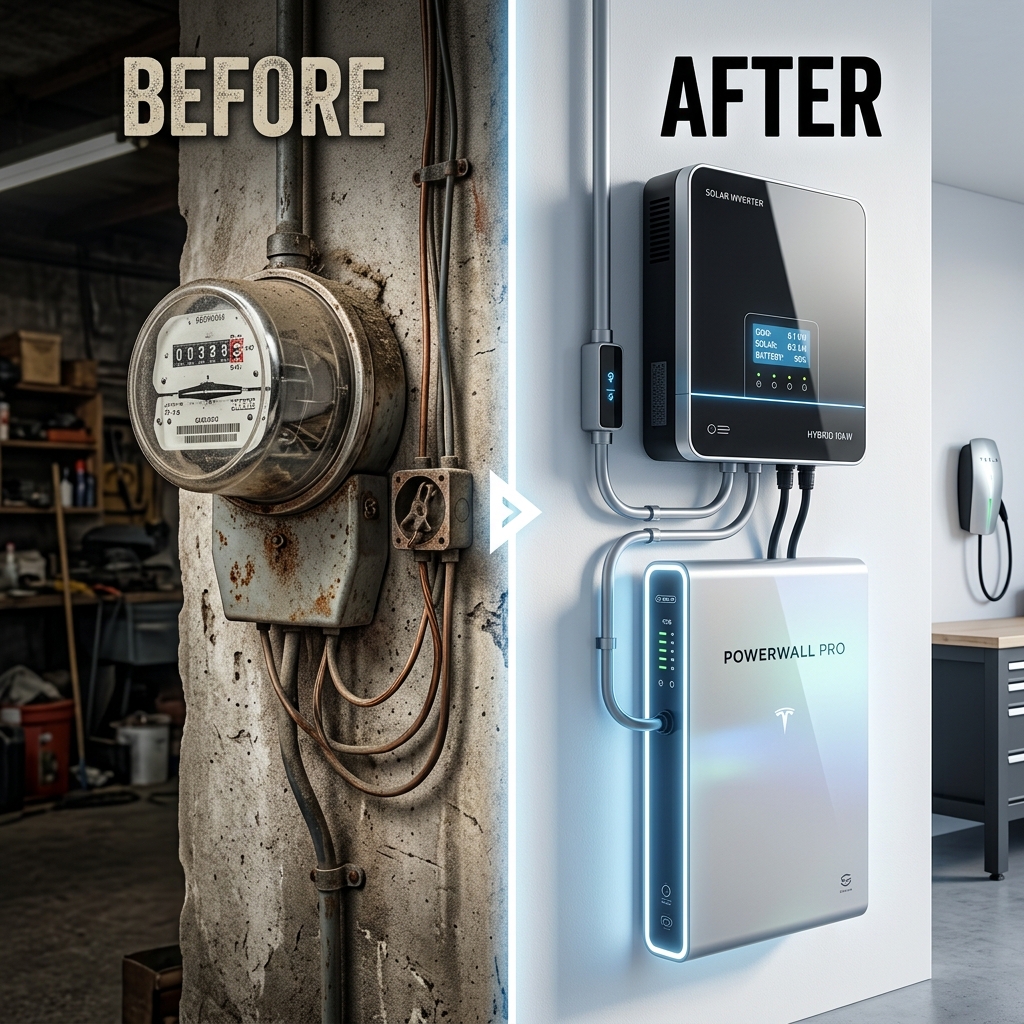
Key Benefits of Net Metering
- Earn Monthly Bill Credits: Export surplus daytime power automatically to offset your nighttime grid electricity consumption.
- 100% Tax-Free Equipment: Enjoy full 12% VAT exemption on solar panels, inverters, and mounting hardware under RA 9513.
- Faster Payback Returns: Lower your net monthly bill significantly and accelerate your return on investment.
Every normal home is well under the 100 kW system capacity limit. Here is how the credit system works in detail.
The credit is smaller than most people think
Here is the key detail. When you export power, Meralco credits you at the generation charge only, called the Blended Generation Rate. That is about ₱5 to ₱6.50 per kWh, not the full ₱13 to ₱14 you pay to buy power. This is why self-use beats exporting. Your credits build up each month, and Meralco settles any leftover balance once a year.
Who qualifies
- Your Meralco account is in good standing with no unpaid balance.
- Your system is 100 kW or smaller, which covers all homes.
- Your property is inside the Meralco service area.
- A licensed electrical engineer designs and signs off on the system.
- The system is installed and working before you apply.
Documents you will need
- Completed net metering application form.
- Single-line diagram signed and sealed by a licensed electrical engineer.
- Electrical permit from your local government unit.
- Building permit, if the roof is penetrated for mounting.
- Certificate of Final Electrical Inspection.
- Your latest Meralco bill and proof of property ownership.
After you apply, Meralco reviews the papers and runs a free field study called the Distribution Impact Study, then installs a bi-directional meter that measures both the power you draw and the power you send back. Approval often takes about 1 to 3 months. Recent ERC rules from 2025 standardized the steps and made the study free, so a complete application now moves faster than it used to. A good installer files all of this for you.
Bonus incentiveRA 9513 also exempts solar panels, inverters, and related equipment from the 12 percent Value Added Tax. That lowers your upfront cost. Ask your installer to confirm the exemption is applied to your quote.
How to size your system
Start with one number: your monthly kWh, printed on your Meralco bill. From there, the math is simple.
As a rule of thumb, 1 kW of panels makes about 4 to 5 kWh per day in the Philippines, or roughly 120 to 150 kWh per month. Panels today are about 400 to 600 watts each. So a 3 kW system is around 5 to 7 panels, and a 5 kW system is around 9 to 12 panels.
A quick example
Say your home uses 500 kWh per month and you use most of your power during the day. A 4 to 5 kW system fits well. If most of your power is used at night, a smaller on-grid system plus good daytime habits, or a battery, makes more sense than an oversized array that just exports cheap credits.
Let SolarSage PH do the math
Enter your Meralco bill and the app sizes your system, then shows product picks from Shopee, Lazada, and TikTok Shop. Same price for you, always.
Size my system freeWhat changes your final price
Two homes with the same 5 kW system can still get different quotes. These are the factors that move the number.
Roof type. A flat concrete roof is simple and cheap to mount on. Light metal roofing may need support beams, which adds about ₱15,000 to ₱30,000.
Location. Metro Manila installations run about 10 to 15 percent higher than the provinces because of labor costs. The higher Meralco rate in the city also means the system pays back faster, so it evens out.
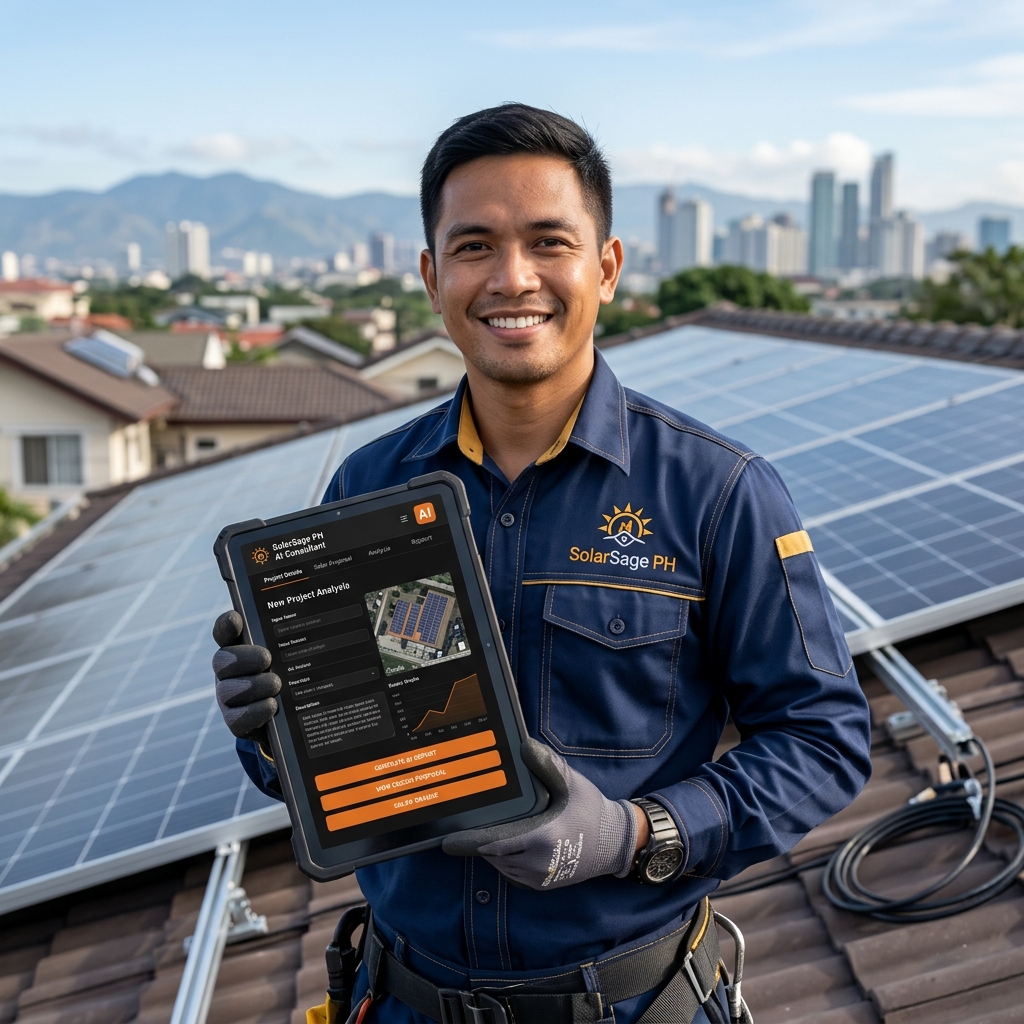
Brand tier. Mid-range brands like Deye, Solis, and Sungrow give strong value for a home. Premium ecosystems can cost 2 to 3 times more, which usually only makes sense for large or commercial setups.
Battery size. This is the biggest swing of all. Always ask for the battery capacity in kWh as a separate line, so you can compare quotes fairly.
Electrical panel. Older homes sometimes need a new main breaker or panel to handle the inverter, which adds about ₱10,000 to ₱25,000 when needed.
How to compare quotesGet three or more quotes. Divide the total price by the system size in kW to compare on a level field. If a quote includes a battery, ask for the kWh and price it out separately, since a bigger battery makes a system look more expensive when it is really just more storage.
Key Reasons to Install Solar Panels in the Philippines
For most Metro Manila homes with a bill above ₱5,000, installing solar is one of the best financial investments available in 2026. Rates keep rising, panel hardware prices have dropped significantly, payback lands in just 4 to 7 years, and the system runs reliably for 25 years or more. An on-grid system without a battery is the most affordable entry point and fits the majority of Filipino families.
The main reasons to wait are a heavily shaded or structurally weak roof, a very low monthly bill, or plans to relocate soon. If none of those apply to your household, 2026 is an exceptional year to make the switch. For more detailed information or a customized evaluation, contact SolarSage PH today!
Conclusion & How to Get Started
Solar energy is becoming increasingly popular in the Philippines, offering significant, guaranteed savings on monthly electricity bills. With net metering providing bill credits for excess power generation, it's an highly efficient way to lower your energy consumption and costs during peak demand times.
Going solar follows four straightforward steps for almost every homeowner:
- Find your monthly kWh usage on your latest Meralco bill.
- Pick a system type (on-grid or hybrid) and the right size for your home.
- Compare verified equipment brands and get at least three installation quotes.
- Apply for net metering, which your licensed installer can file on your behalf.
Ready to power your home and own your energy?
To get started immediately, contact SolarSage PH for a free consultation and installation estimate today!
Get Your Free Solar Quote TodayAbout SolarSage PH
SolarSage PH is a free app that helps Filipino homeowners design a solar system, understand net metering, and find trusted products. We guide, we do not pressure, and every recommendation is disclosed honestly. Power your home. Own your energy.
Frequently asked questions
How much do solar panels cost in the Philippines in 2026?
How much does a 5 kW solar system cost?
Is solar worth it in the Philippines?
How long is the payback period?
How does net metering work with Meralco?
Will solar remove my Meralco bill completely?
How many solar panels do I need?
Do I need batteries?
How long does net metering approval take?
Are solar panels tax-free in the Philippines?
Sources and references
Prices and rules in this guide are based on current Philippine solar market data and official sources, as of July 2026. Prices change over time, so always confirm with a licensed installer before you buy.
- Manila Electric Company (Meralco), Solar and Net-Metering program pages and residential rate advisories.
- Energy Regulatory Commission (ERC), Net-Metering rules and 2025 amended guidelines.
- Department of Energy (DOE), Philippines, renewable energy program information.
- Republic Act 9513, the Renewable Energy Act of 2008.